Minimalist Parenting: Do Kids Really Need So Many Toys?
The question of minimalist parenting: do kids really need so many toys has moved from fringe philosophy to mainstream conversation — and for good reason. Walk into any family home today and you’re likely to find overflowing toy bins, storage units dedicated entirely to plastic figurines, and children who somehow claim they have “nothing to play with.” The minimalist parenting movement challenges this reality, asking whether the sheer volume of toys children own is helping or quietly hindering their growth. Research suggests that toy overload can fragment a child’s attention, stifle imaginative thinking, and create environments that are difficult to manage for both parents and kids.
This article covers:
- What minimalist parenting is and its core principles
- How toy overload affects children’s behavior and learning
- The developmental benefits of fewer, more intentional toys
- Which toy types genuinely support growth
- Practical strategies to simplify and organize your child’s toy collection
What Is Minimalist Parenting?
Minimalist parenting is not about deprivation — it’s about intentional choices. At its heart, this approach encourages parents to reduce clutter, resist the pull of consumerism, and prioritize meaningful experiences over the accumulation of possessions. When applied to toys, it means selecting fewer items that genuinely serve a child’s development rather than filling a room with novelties that lose their appeal within days.
Core Principles of Minimalist Parenting
The philosophy rests on a clear set of values that guide how parents shop, organize, and engage with their children’s play environment:
- Mindful purchasing — buying with clear developmental intent rather than impulse
- Quality over quantity — one exceptional toy outperforms ten forgettable ones
- Experience-focused living — valuing time, nature, and creativity over objects
- Reducing household clutter — creating calm, manageable spaces for children and adults alike
- Encouraging independence — trusting children to direct their own play without excessive stimulation
How Minimalism Changes the Way Parents Choose Toys
Rather than filling a cart at the first sign of a sale, minimalist parents apply deliberate criteria before any toy enters the home. A typical decision process looks like this:
- Does this toy serve more than one purpose or type of play?
- Will it grow with the child across multiple developmental stages?
- Does it encourage active thinking rather than passive entertainment?
- Is it durable, safe, and made from quality materials?
- Does it replace something already owned, or does it genuinely add value?
The Problem With Toy Overload in Modern Childhood
Several converging forces have led to today’s overwhelming toy culture. Aggressive marketing targets children directly, holiday gift-giving has expanded dramatically, and social pressure leads many parents to equate more toys with better parenting. The result is children who, on average, own hundreds of toys but actively use only a small fraction of them.
How Too Many Toys Can Affect Children’s Behavior
A landmark study from the University of Toledo found that toddlers who played with fewer toys demonstrated longer attention spans, higher quality play, and deeper engagement than those surrounded by many options. The behaviors linked to toy overload are consistent and concerning:
- Shortened attention span due to constant switching between options
- Increased boredom, even with abundant choices available
- Difficulty focusing on one activity to completion
- Greater frustration and emotional dysregulation during cleanup
- Reduced ability to self-direct play without adult intervention
Why More Toys Do Not Always Mean More Learning
Counterintuitively, excess toys can reduce the richness of a child’s imaginative experience. When everything is provided, there is little left for a child’s mind to create. The comparison below illustrates how toy quantity shapes the quality of play:
| Factor | Many Toys | Fewer Toys |
|---|---|---|
| Creativity | Reduced — options are pre-defined | Enhanced — children invent new uses |
| Focus | Fragmented — constant distraction | Deep — sustained engagement |
| Engagement | Shallow and short-lived | Rich and extended |
| Problem-solving | Limited — less need to adapt | Strong — children improvise solutions |
Benefits of Fewer Toys for Child Development
Limiting the number of toys a child has access to does not restrict childhood — it enriches it. With fewer options competing for attention, children develop creativity, stronger concentration, and a more stable emotional foundation. These benefits are well documented across developmental psychology and early childhood education research.
Encouraging Creativity and Imaginative Play
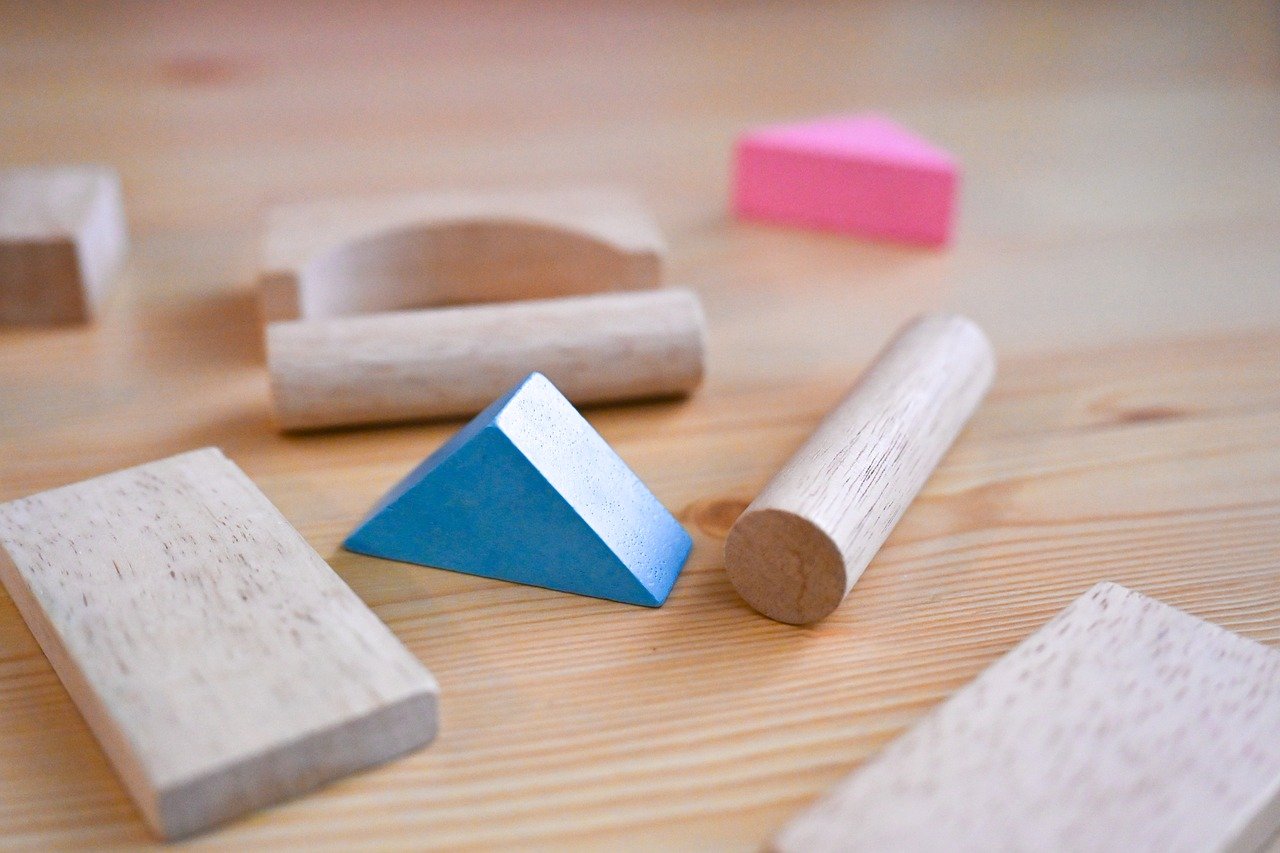
When children are not overwhelmed by choices, they begin to transform simple objects into entire worlds. A set of wooden blocks becomes a city; a cardboard box becomes a spaceship. Open-ended toys are especially powerful because they have no single “correct” use, leaving everything to the child’s imagination:
- Building blocks — develop spatial reasoning and storytelling
- Art supplies — support self-expression and fine motor skills
- Dress-up and pretend-play sets — build language, empathy, and social skills
- Loose parts (stones, fabric, natural objects) — encourage experimentation and design thinking
Improving Focus and Attention Span
Children who play in simplified environments consistently demonstrate longer concentration periods. Without the constant lure of the next shiny object, they learn to settle into a task, navigate challenges, and experience the satisfaction of completion. Parents who implement toy rotation systems report that their children spend significantly more time engaged in single activities — sometimes 30 to 45 minutes or longer — compared to environments saturated with choice.
Supporting Emotional and Cognitive Development
Meaningful, focused play builds more than creativity — it shapes how a child thinks and regulates emotion. Key developmental benefits include:
- Strengthened problem-solving skills through open-ended challenges
- Greater independence and self-direction in play
- Improved emotional regulation from completing tasks without overstimulation
- Enhanced resilience — children learn to make the most of what they have
What Types of Toys Actually Benefit Children Most
Not all toys are created equal. The most developmentally valuable toys share common traits: they are open-ended, durable, and designed to grow with the child. Versatility matters far more than novelty or electronic features.
Open-Ended Toys That Encourage Creativity
According to research highlighted by Harvard’s Center on the Developing Child, active, engaged play — particularly the kind prompted by simple, open-ended toys — directly strengthens neural connections in developing brains. The best examples include:
- Wooden building blocks — engineering, math, and narrative play
- Play dough and clay — creativity, sensory exploration, fine motor control
- Puzzles — spatial reasoning, patience, and logical thinking
- Simple pretend-play sets (kitchen, tools, doctor kit) — language, empathy, and role comprehension
- Art materials — self-expression, motor skills, and abstract thinking
Age-Appropriate Toys That Support Learning
| Age Range | Recommended Toy Types | Developmental Benefits |
|---|---|---|
| 0–12 months | Soft rattles, sensory mats, simple mobiles | Sensory development, cause-and-effect understanding |
| 1–3 years | Stacking toys, shape sorters, board books | Fine motor skills, language acquisition, object permanence |
| 3–6 years | Building blocks, pretend-play sets, art supplies | Creativity, social skills, narrative thinking |
| 6–9 years | Puzzles, construction kits, strategy games | Logical reasoning, patience, collaboration |
| 9–12 years | Science kits, craft materials, complex building sets | Critical thinking, perseverance, technical skills |
Practical Strategies for Reducing Toy Clutter at Home
Transitioning to a simpler toy environment does not happen overnight, and it should never feel punitive for children. The goal is gradual, thoughtful simplification that creates space for richer play without causing distress or a sense of loss.
How to Declutter and Organize Children’s Toys
- Sort everything into three categories: keep, donate, and discard (broken or incomplete sets)
- Involve your child in age-appropriate decisions about what to keep
- Remove duplicates — keep the best version of similar toys
- Donate gently used toys to shelters, libraries, or community centers
- Store rather than display everything — rotate what’s accessible at any time
- Reassess seasonally to prevent accumulation after birthdays and holidays
The Toy Rotation Method for Maintaining Interest
Toy rotation is one of the most effective tools in a minimalist parent’s toolkit. By keeping only a portion of toys accessible at any time and cycling others in and out, children experience the novelty of “new” toys without any additional spending. To implement it effectively:
- Divide toys into 3–4 rotation sets stored in labeled boxes
- Switch sets every 1–2 weeks, or when you notice interest declining
- Always include at least one open-ended option in each rotation
- Observe which toys generate the most engagement and prioritize keeping those accessible
Teaching Children to Value Fewer Possessions
Minimalism is most sustainable when children internalize its values, not just follow its rules. Parents can nurture a healthy relationship with belongings by:
- Letting children choose favorites to donate, building agency and generosity
- Modeling gratitude for what the family already has
- Celebrating experiences (trips, cooking together, nature walks) over material gifts
- Reading books about generosity and simplicity to reinforce values organically
Balancing Minimalism With Children’s Needs
Minimalist parenting is not about enforcing austerity or making children feel deprived. It’s about curating an environment where every toy earns its place, and children are free to play deeply rather than wide. The most effective minimalist parents remain flexible, responsive to their child’s evolving interests, and willing to adjust as developmental needs change.
How Many Toys Do Kids Actually Need?
There is no universally “correct” number — the right amount depends on the child’s age, temperament, and available space. Rather than counting toys, focus on ensuring key categories are represented:
| Toy Category | Examples | Why It Matters |
|---|---|---|
| Creative/Art | Crayons, clay, paper | Self-expression and fine motor development |
| Construction | Blocks, LEGO, magnetic tiles | Spatial thinking and engineering skills |
| Pretend Play | Dress-up, kitchen sets, puppets | Language, empathy, and social reasoning |
| Physical | Ball, jump rope, balance board | Gross motor skills and coordination |
| Cognitive | Puzzles, board games, books | Logic, memory, and sustained attention |
Signs Your Child May Have Too Many Toys
- Most toys go untouched for weeks at a time
- Your child complains of boredom despite a full toy room
- Cleanup is a daily battle due to sheer volume
- New toys lose appeal within hours or days of receiving them
- Your child struggles to focus on a single activity
- Play feels frantic, scattered, or constantly interrupted
Conclusion
The evidence is clear: children do not need more toys — they need better toys and the space to truly play with them. Minimalist parenting offers a framework that honors childhood creativity, supports healthy development, and frees families from the relentless cycle of accumulation. When parents commit to intentional choices over impulse buying, quality over quantity, and experience over excess, children gain something far more valuable than a full toy room — they gain the conditions to grow, imagine, and thrive. Starting small, decluttering gradually, and observing how your child plays in a simpler environment can be genuinely transformative for the entire household.